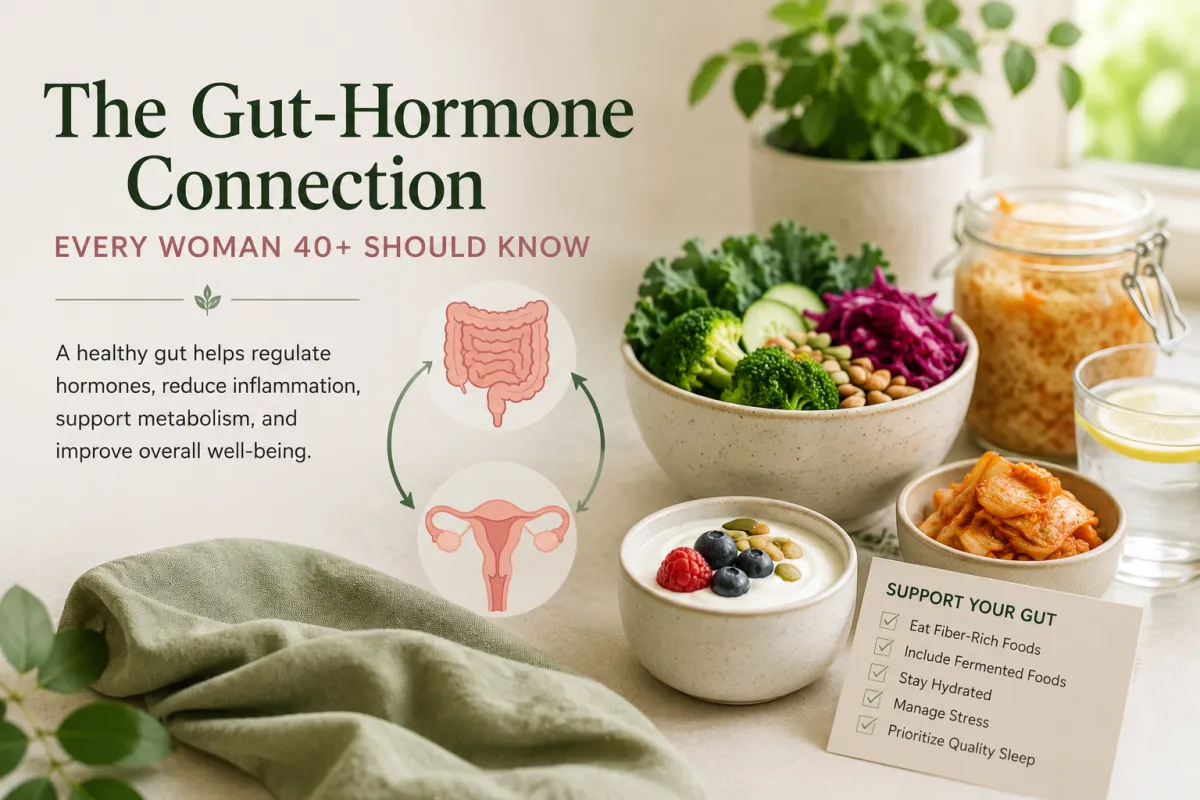
The Gut-Hormone Connection Every Woman 40+ Should Know
If you're experiencing bloating, fatigue, stubborn weight gain, mood swings, or worsening menopause symptoms, your hormones may not be the only thing contributing to how you feel.
Your gut plays a surprisingly powerful role in hormone balance.
Often called the "second brain," the digestive system is home to trillions of microorganisms that influence everything from nutrient absorption and immune function to inflammation and hormone metabolism.
For women over 40, understanding the connection between gut health and hormones can be one of the most important steps toward improving overall wellness.
What Is the Gut Microbiome?
Your gut microbiome is a community of trillions of bacteria, fungi, and other microorganisms living primarily in your large intestine.
While the word "bacteria" often sounds negative, many of these microbes are essential for good health.
A balanced microbiome helps:
Digest food
Produce certain vitamins
Support immune health
Reduce inflammation
Protect the intestinal lining
Regulate metabolism
Help process hormones
When this balance is disrupted, your entire body can be affected.
How Your Gut Influences Hormones
One of the gut's most important jobs is helping your body metabolize and eliminate hormones.
Healthy gut bacteria help regulate estrogen through a collection of microbes known as the estrobolome.
When the gut microbiome is balanced, excess estrogen can be properly processed and removed.
However, when gut health is compromised, hormones may be recycled back into the bloodstream instead of being eliminated efficiently.
This imbalance may contribute to symptoms such as:
PMS
Breast tenderness
Irregular periods
Mood changes
Weight gain
Hot flashes
Fatigue
The Gut and Inflammation
An unhealthy gut can contribute to chronic, low-grade inflammation.
Over time, inflammation may affect:
Hormone production
Blood sugar regulation
Thyroid function
Energy levels
Immune health
Many women notice improvements in overall well-being when inflammation is reduced through nutrition and lifestyle changes.
Signs Your Gut May Need Support
Digestive symptoms aren't the only indicators of poor gut health.
Common signs include:
Frequent bloating
Constipation or diarrhea
Food sensitivities
Acid reflux
Brain fog
Fatigue
Skin issues
Sugar cravings
Frequent illness
Difficulty maintaining a healthy weight
Even if digestive symptoms seem mild, they may still influence overall health.
Nutrition for a Healthy Gut
Supporting your gut doesn't require a restrictive diet.
Simple habits can make a significant difference.
Focus on:
Fiber-Rich Foods
Vegetables, fruits, legumes, and whole grains help nourish beneficial gut bacteria.
Fermented Foods
Foods like yogurt, kefir, kimchi, sauerkraut, and miso contain beneficial microbes that may support gut diversity.
Healthy Fats
Omega-3 fats from fish, walnuts, flaxseed, and chia seeds may help reduce inflammation.
Hydration
Water supports healthy digestion and regular bowel movements.
Lifestyle Habits Matter Too
Gut health isn't determined by food alone.
Other important factors include:
Quality sleep
Regular physical activity
Stress management
Avoiding unnecessary antibiotics
Limiting ultra-processed foods
Eating slowly and mindfully
Small daily habits often have the greatest long-term impact.
When Functional Testing May Be Helpful
If symptoms persist despite healthy lifestyle changes, functional testing may provide additional insight.
Depending on your health history, testing may evaluate:
Gut microbiome diversity
Digestive function
Inflammation
Food sensitivities
Nutrient absorption
Hormone metabolism
These results can help create a personalized care plan rather than relying on trial and error.
The Bottom Line
Your gut and hormones work together every day.
When your digestive system is healthy, your body is better equipped to regulate hormones, absorb nutrients, manage inflammation, and support overall well-being.
If you've been focusing only on your hormones, it may be time to give your gut the attention it deserves.
A healthy gut is about more than digestion—it's one of the foundations of lasting health.
Key Takeaways
The gut microbiome helps regulate hormone balance, especially estrogen.
Poor gut health may contribute to inflammation, fatigue, weight gain, and hormone-related symptoms.
Nutrition, sleep, stress management, and regular movement all support a healthier microbiome.
Functional testing can identify underlying gut imbalances when symptoms persist.
Supporting gut health can positively influence energy, metabolism, and hormonal wellness.