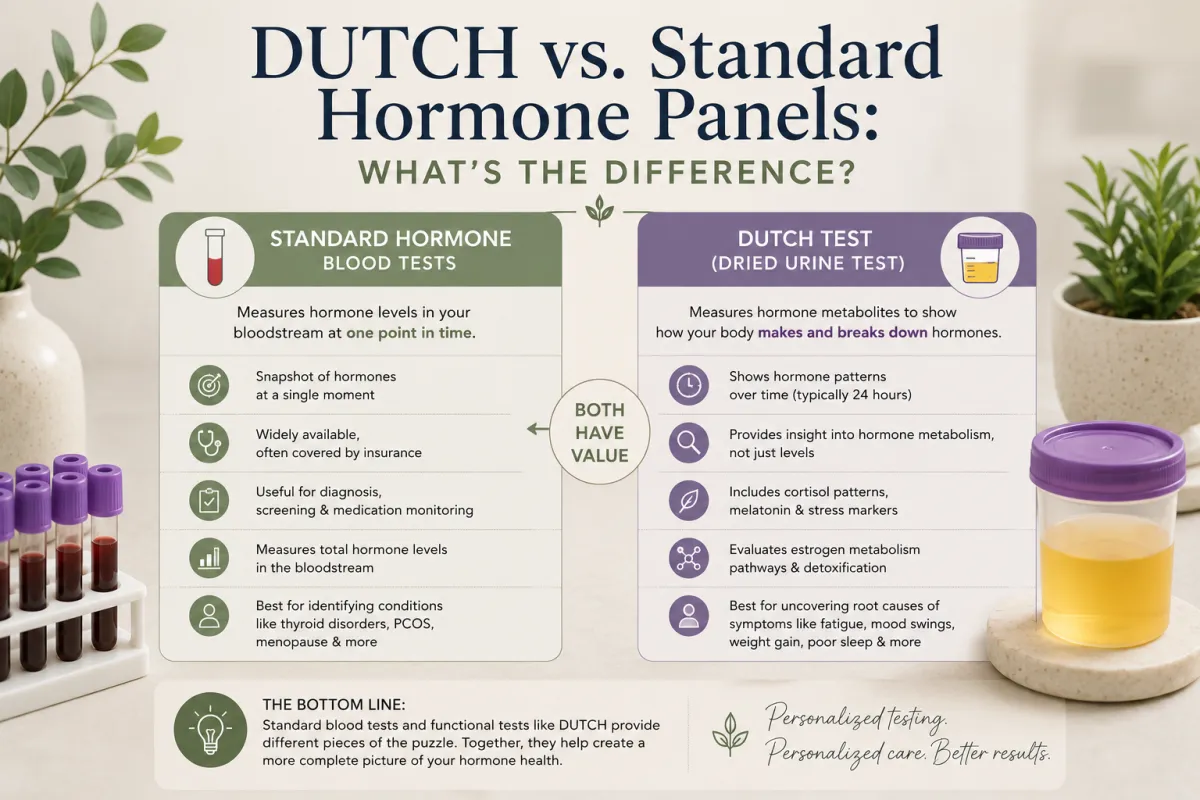
DUTCH vs. Standard Hormone Panels: What's the Difference?
If you're dealing with fatigue, mood swings, weight gain, poor sleep, irregular periods, or symptoms of perimenopause or menopause, hormone testing may seem like the logical next step.
But with so many testing options available, how do you know which one is right for you?
Many women are familiar with standard blood tests ordered during an annual physical. However, functional medicine practitioners may also recommend a DUTCH Test® (Dried Urine Test for Comprehensive Hormones) to gain deeper insight into hormone patterns.
Both tests have value—but they answer different questions.
Understanding the differences can help you have more informed conversations with your healthcare provider and determine which testing approach best fits your needs.
What Are Standard Hormone Blood Tests?
Standard blood tests measure the amount of hormones circulating in your bloodstream at the time your sample is collected.
Common hormones that may be tested include:
Estrogen
Progesterone
Testosterone
Thyroid hormones
Follicle-Stimulating Hormone (FSH)
Luteinizing Hormone (LH)
Blood testing is widely available and is often the first step when evaluating hormone-related symptoms.
It is particularly useful for diagnosing certain medical conditions, monitoring treatment, and identifying significant hormone deficiencies or excesses.
What Is the DUTCH Test?
The DUTCH Test (Dried Urine Test for Comprehensive Hormones) is a specialized functional medicine assessment that evaluates hormone levels and how your body metabolizes them.
Rather than measuring only how much hormone is present, the DUTCH Test provides insight into:
Hormone production
Hormone metabolism
Cortisol patterns
Daily stress response
Melatonin markers
Estrogen metabolism pathways
Because it measures hormone metabolites, it offers a broader picture of how hormones are processed throughout the body.
Blood Tests vs. DUTCH Testing
While both tests evaluate hormones, they provide different types of information.
Standard Blood TestingDUTCH TestingMeasures hormone levels in the bloodstreamMeasures hormone metabolites in dried urineWidely availableSpecialized functional medicine testUseful for diagnosis and monitoringUseful for identifying hormone patternsSnapshot at one point in timeProvides a broader view of hormone metabolismOften covered by insuranceMay be an out-of-pocket expense
Neither test is "better" in every situation—they simply serve different purposes.
When Standard Blood Testing Is Appropriate
Conventional blood testing is often recommended when evaluating:
Thyroid disorders
Menopause confirmation
Polycystic Ovary Syndrome (PCOS)
Low testosterone
Fertility concerns
General hormone screening
It is also commonly used to monitor medications or hormone replacement therapy under medical supervision.
When Functional Hormone Testing May Be Helpful
Some women continue experiencing symptoms even after routine blood work appears normal.
Functional testing may provide additional context when evaluating:
Persistent fatigue
Poor sleep
Mood changes
High stress
Irregular menstrual cycles
Perimenopause symptoms
Low libido
Difficulty losing weight
Rather than replacing conventional testing, functional assessments often complement it by providing a more comprehensive view of hormone function.
Why Cortisol Matters
One of the unique features of the DUTCH Test is its ability to evaluate daily cortisol patterns.
Cortisol, often called the "stress hormone," influences:
Energy
Blood sugar regulation
Sleep
Immune function
Inflammation
Weight management
Instead of measuring cortisol only once, the DUTCH Test evaluates how cortisol changes throughout the day, offering insight into your body's stress response.
Understanding Hormone Metabolism
Hormones don't simply exist in the body—they're constantly being produced, used, and broken down.
How your body metabolizes estrogen can influence overall hormonal balance.
Functional testing may help identify patterns that support more personalized lifestyle and nutrition recommendations.
Is One Test Better Than the Other?
Not necessarily.
The best test depends on:
Your symptoms
Medical history
Current medications
Healthcare goals
Recommendations from your healthcare provider
Sometimes standard blood work provides all the information needed.
In other situations, additional functional testing may offer valuable insight into ongoing symptoms that are difficult to explain.
The Bottom Line
Hormone testing isn't about finding a single "perfect" test.
It's about choosing the right tool for the right question.
Standard blood tests remain an important part of medical care, while functional assessments like the DUTCH Test can provide additional information about hormone metabolism and stress patterns.
When interpreted alongside your symptoms, health history, and lifestyle, these tools can help guide a more personalized approach to wellness.
Key Takeaways
Standard blood tests measure hormone levels circulating in your bloodstream.
The DUTCH Test evaluates hormone production, metabolism, and cortisol patterns.
Both testing methods have important roles and often complement one another.
Functional testing may provide additional insight when symptoms persist despite normal routine labs.
Test selection should always be based on your individual health needs and healthcare provider's recommendations.